

Netflix Drops Bid for Warner Bros: Paramount Emerges Victorious
The recent acquisition attempts for Warner Bros. Discovery marked a significant moment in the ongoing evolution of the streaming industry. As competition intensifies, Netflix initially placed an ambitious bid of $82.7 billion for the media conglomerate. This move underscored the company’s strategic goal to expand its diverse offerings and enhance its competitive edge in the crowded streaming market.
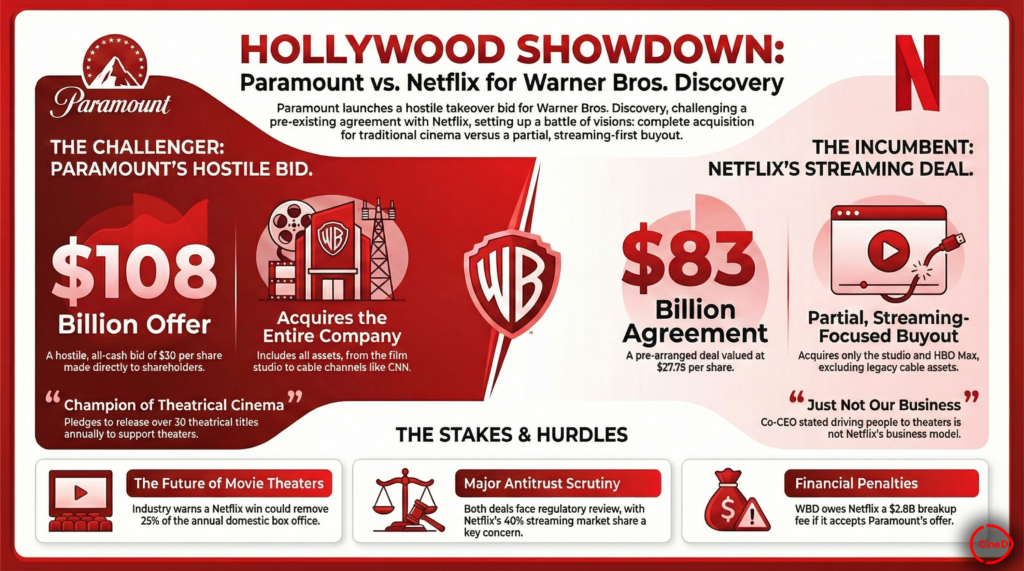
In response to Netflix’s proposal, Paramount Skydance Corp. entered the fray, launching counteroffers that further complicated the acquisition landscape. These bids were not merely financial transactions; they represented a crucial chess game among major industry players, each vying to secure content and bolster their respective platforms. Warner Bros. Discovery, with a rich library of intellectual property and a prominent foothold in both television and film, became a highly coveted asset.
The stakes in this bidding war were extraordinarily high. For Netflix, acquiring Warner Bros. would have meant a significant enhancement of its content portfolio—adding beloved franchises and films that could attract new subscribers, thereby potentially reversing sluggish growth trends experienced in recent quarters. Meanwhile, for Paramount Skydance Corp., this acquisition represented an opportunity to solidify its standing as a formidable contender in the streaming arena, allowing it to leverage Warner’s extensive library to double down on its viewer engagement strategies.
This battle was not just about capital; it encapsulated larger themes of market positioning and content ownership in a landscape where viewers have an increasingly diverse array of choices. Each company’s tactics and responses to the other’s moves painted a clear picture of the robust strategies required to thrive in today’s fast-evolving entertainment landscape.
Financial Implications for Netflix and Investors
Netflix’s recent decision to withdraw from the bidding for Warner Bros has generated significant discussion among financial analysts and investors alike. This strategic move appears to be aimed at preserving the company’s financial resources and refocusing its investments within the entertainment sector. By stepping away from what could have been a costly acquisition, Netflix seems to be prioritizing a sustainable growth trajectory over the immediate allure of expanding its content library.
Following the announcement of their exit from the bidding process, Netflix shares experienced a remarkable surge, jumping by 13% in after-hours trading. This reaction from the market suggests a strong vote of confidence by investors in Netflix’s decision-making process. Investors often take such developments as indicators of how well a company understands its operational limits and financial capabilities. The positive movement in the stock price may be indicative of an alignment between Netflix’s strategic direction and the expectations of its shareholders.
The decision to withdraw also reflects a cautious approach to capital allocation amidst increasing competition in the streaming space. By forgoing the significant financial burden of acquiring Warner Bros, Netflix can redirect its capital towards more strategic content development initiatives and marketing efforts. This strategic pivot is particularly crucial as the company faces pressure from a growing roster of competitors, necessitating a robust investment framework to maintain subscriber growth and market share.
Ultimately, while the immediate implications of Netflix’s bidding withdrawal may leave some unanswered questions regarding future content expansion, the positive response from investors highlights a growing confidence in the company’s long-term strategic vision. This trend indicates that Netflix is becoming increasingly adept at balancing ambitious goals with prudent financial management, a metric that will be closely monitored by stakeholders moving forward.
Paramount’s Strategic Win and Future Prospects
Paramount’s recent victory in securing Warner Bros. Discovery marks a significant strategic win in the rapidly evolving entertainment industry. This merger not only consolidates assets and resources but also enhances Paramount’s storytelling capabilities by combining two powerhouse brands known for high-quality content. Paramount’s leadership, including CEO Brian Robbins, emphasized their commitment to fostering creativity while harnessing the technological advancements that accompany such a considerable merger.
The integration of Warner Bros. Discovery into Paramount’s existing operations is anticipated to yield a variety of benefits for stakeholders. By merging marketing, production, and distribution efforts, the newly formed entity is well-positioned to streamline costs, thereby improving profitability. The collaboration between the two filmmaking giants also allows for a more extensive array of programming choices that cater to varied audiences, ultimately enhancing viewer engagement and satisfaction.
Moreover, this merger opens new avenues for innovation in content delivery. With a focus on maximizing streaming capabilities, Paramount is set to broaden its reach in the digital realm, catering to the increasing consumer demand for on-the-go viewing options. The synergy of Paramount’s existing streaming platform and Warner Bros. Discovery’s vast library of content promises to create compelling offerings that attract subscribers and retain viewer loyalty.
In a competitive landscape filled with rising challengers, Paramount’s strategic decision to pursue Warner Bros. Discovery strengthens its market position, paving the way for long-term growth and sustainability. Industry analysts suggest that this merger could become a benchmark for future collaborations within the entertainment world, indicating a significant shift towards consolidation in response to changing consumer behaviors. The future looks promising for Paramount as they leverage this acquisition to not only bolster their portfolio but also redefine their role in the broader entertainment landscape.
Behind the Scenes: Political and Market Influences
The recent bidding war for Warner Bros. exemplified the intricate interplay between political factors and market dynamics, significantly influencing the outcomes for both Netflix and Paramount. As competition escalated, both companies recognized the importance of engaging with lawmakers in Washington D.C. These interactions were crucial in understanding the evolving regulatory landscape that shapes the streaming industry.
Executives from both streaming giants actively sought to influence policymakers, addressing concerns around antitrust laws and media consolidation. Given the increasing scrutiny on major mergers and acquisitions, their outreach aimed to underscore the necessity of such consolidations to foster innovation and remain competitive on a global scale. Industry leaders voiced their apprehensions about the challenges presented by regulatory frameworks that could inhibit necessary growth and collaboration amidst the rapidly changing media landscape.
Moreover, discussions surrounding cultural and economic impacts highlighted how government perspectives could affect public sentiment on such mergers. Executives from Netflix and Paramount shared insights on how meeting with key legislators allowed them to present their arguments regarding the benefits of a more diversified content ecosystem. These engagements may have shifted the public and political perception, ultimately making an impact on the bidding process.
The role of governmental policy cannot be understated; it functions as a double-edged sword that can either facilitate or hinder corporate ambitions. For instance, both companies had to navigate the complexities induced by regulatory caution, particularly related to content ownership and antitrust concerns. As such, understanding the political landscape became integral to shaping their competitive strategies, especially as they vied for market dominance in an increasingly fragmented field.
